
A Sapiens field story · Colombia
Forecasts become clean water before drought arrives
In Colombia, a forecast is being treated not as a warning to file away, but as time that can be used to protect a family.
The fuller story
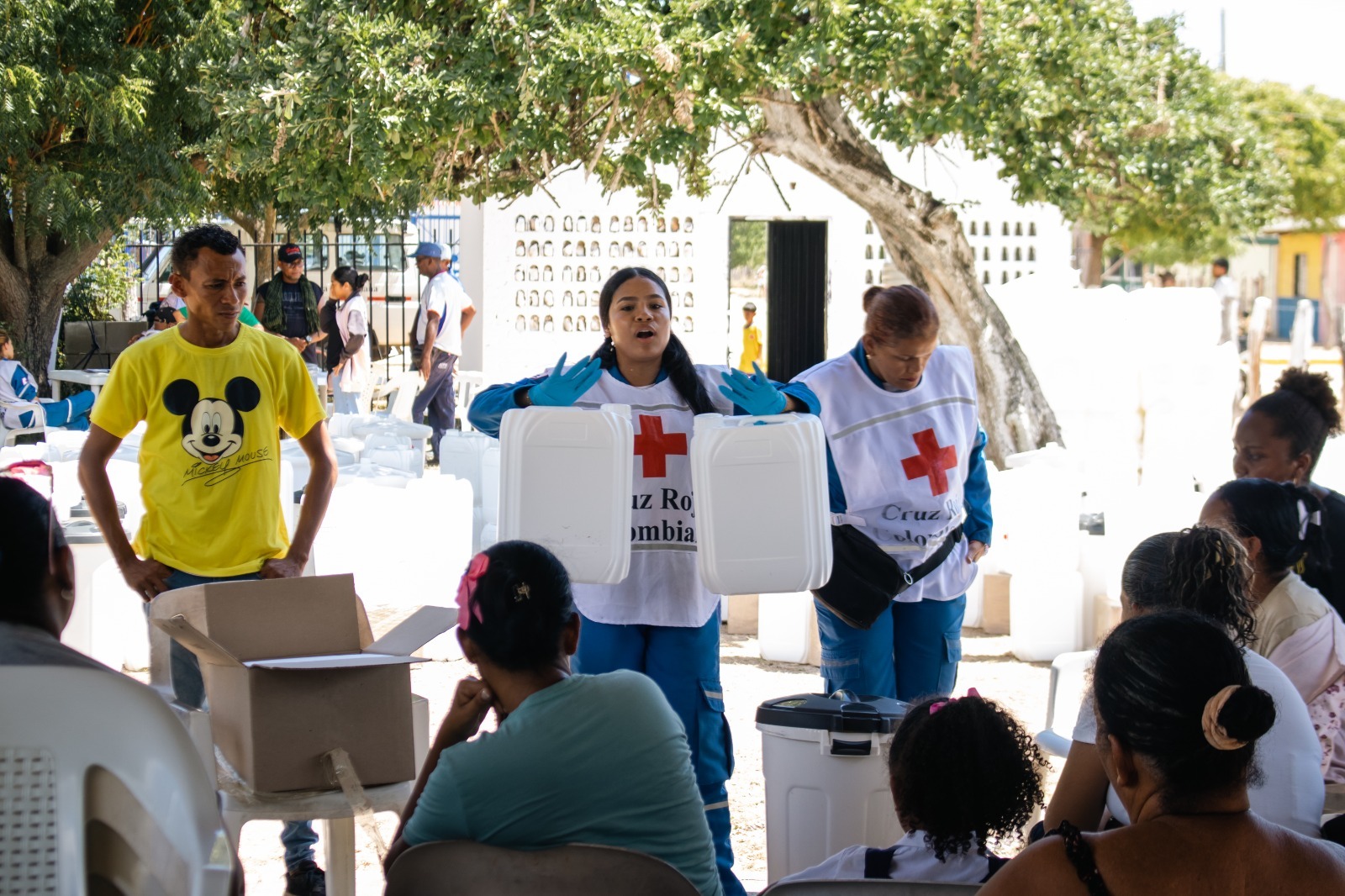
In Tolima and Cesar, the Colombian Red Cross is turning El Niño forecasts into early action: safe-water kits, support for crops and livestock, and cash before shortages become a disaster.
This is an original Sapiens narrative built from the credited reporting. It stays close to the documented people, places and facts while adding the context needed to understand why the story matters.
Keep the original source beside youThe central idea
A forecast can become practical time.
Drought response often begins after wells run low, crops fail and families have already sold what they depend on. The Colombian Red Cross is working from a different premise: if the science gives communities reliable warning, help can move before loss becomes unavoidable.
That approach is called anticipatory action. Forecast thresholds trigger agreed steps, allowing local teams to prepare water, protect livelihoods and help households make decisions while they still have options.
What early action looks like
Preparation is made tangible.
In the departments of Tolima and Cesar, the response described by IFRC includes safe-water materials, support for crops and livestock, and cash assistance. None of these measures eliminates drought. Together, they can reduce the number of impossible choices a family faces when rainfall fails.
The value is not only speed. Acting early can protect the tools, animals and income that make recovery possible after the dry period passes.
Why it matters
Humanitarian work can begin before the headline.
The story challenges the idea that aid must always arrive after visible destruction. A weather model, a local volunteer network and a pre-agreed plan can make prevention part of humanitarian response.
It also depends on trust. Forecasts have to be translated into decisions that make sense locally, and communities need a real role in choosing what support will be useful.
How the trigger works
Science has to lead to a decision, not only a forecast.
Anticipatory action starts long before a household receives support. Climate specialists and responders identify a hazard, agree on thresholds that signal a serious likelihood of harm and connect those thresholds to actions that are already designed and financed. When the trigger is reached, teams do not begin inventing a response; they begin carrying out one that has been prepared.
That distinction matters in a slow-moving emergency. Drought does not arrive in a single dramatic moment. Rain becomes less reliable, water sources weaken and the condition of crops and animals deteriorates over time. A trigger gives institutions permission to move while prevention can still change the outcome.
The household calculation
Cash and water protect more than the next meal.
A family preparing for drought is balancing interconnected needs. Water is required for drinking and hygiene, but also for animals and food production. A failed crop affects household meals, future seed, income and debt. Losing livestock can remove savings accumulated over years.
Flexible cash can help a household act on its own priorities: repairing storage, transporting water, purchasing feed or covering another urgent cost without selling a productive asset. The approach recognizes that people facing a forecast are not passive recipients. They are already planning; early support expands the choices available to them.
What remains uncertain
Acting early does not mean pretending a forecast is perfect.
Forecasts describe probability, not certainty. A trigger can activate and the predicted conditions may arrive differently than expected. That uncertainty is not a reason to wait until damage is undeniable; it is a reason to design assistance that remains useful, accountable and proportionate even when conditions change.
The deeper test is whether early action becomes routine rather than exceptional. It requires dependable financing, locally understood warnings and institutions willing to value losses prevented—even though prevention is less visible than an emergency distribution after disaster has already occurred.