
A Sapiens field story · Gaza
Between every water delivery is the question of whether the next one can arrive
In Gaza, large response totals coexist with neighbourhoods and displacement sites that remain beyond reach. The distance between those two realities is where daily life is being decided.
The fuller story
OCHA reported that 90 per cent of Gaza’s population experienced moderate-to-high water insecurity in early July. Kitchens and bakeries continued producing food at scale, but water, spare parts, safe access and functioning waste systems remained painfully fragile.
This is an original Sapiens narrative built from the credited reporting. It stays close to the documented people, places and facts while adding the context needed to understand why the story matters.
Keep the original source beside youWhat the survey found
Water insecurity rose even while parts of the response kept functioning.
A July monitoring survey found that 90 per cent of people in Gaza experienced frequent and unpredictable disruption in access to safe, clean and reliable water for drinking, cooking and hygiene. The figure had been 84 per cent in June.
The change is important because it measures reliability, not simply whether water exists somewhere in the system. A household can receive water and still be insecure if the next delivery is uncertain, the quantity is too small or the route to collect it is dangerous.
The geography inside a percentage
The same crisis is not distributed evenly.
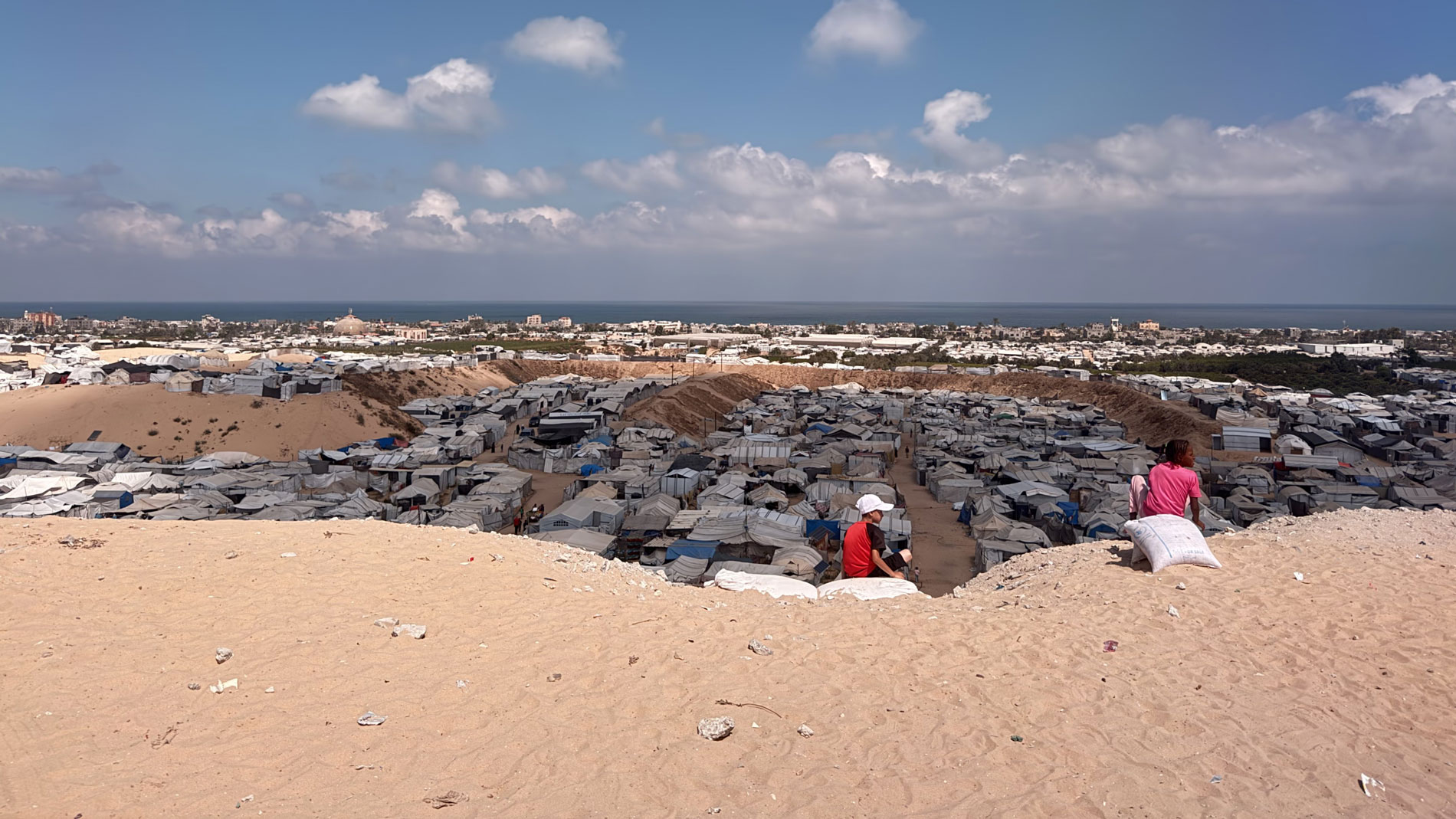
Gaza City recorded the highest water insecurity in the survey, followed by Khan Younis and Deir al-Balah. Meanwhile, WASH partners had been unable to reach about 5,000 people sheltering at six displacement sites in northern Rafah since early July because of insecurity and stray bullets.
Aggregate figures can smooth out these gaps. The people left outside a route or service are not exceptions to the response picture; they are evidence of where it is breaking.
Food at scale
Hundreds of thousands of meals do not make the wider system secure.
As of 6 August, 23 partners were preparing about 691,000 meals a day through 97 kitchens and distributing them across more than a thousand locations. By 10 August, 28 subsidized bakeries were producing roughly 100,000 two-kilogram bread bundles daily.
These operations are immense and necessary. They also depend on fuel, ingredients, functioning equipment, staff safety, storage and routes that remain open. A strong daily number can fall quickly when any one link in that chain fails.
What water repair requires
A pipe is connected to permissions, power, parts and people.
Repairing a water network may require a pump, a generator component, fuel, pipe fittings, technical staff and safe access to the damaged site. Restrictions on spare parts can therefore become restrictions on drinking water even when humanitarian teams are present and ready to work.
The same is true of sanitation. Waste collection requires access to landfills, vehicles, fuel and safe routes. Sewage removal requires functioning equipment and somewhere for waste to go. Public health depends on these quiet systems continuing together.
A narrow improvement
Some indicators improved, and that should be read carefully rather than dismissed.
OCHA reported improvement in some sewage, sludge and nearby solid-waste indicators. Those gains matter because they reduce exposure to disease and make displacement conditions less dangerous.
They do not cancel worsening water insecurity. Humanitarian analysis has to hold both facts at once: a response can achieve meaningful improvement in one part of the system while the overall conditions remain severe and unstable.
The measure of access
The question is not only how much moved, but who could safely receive it.
Truck counts, meal totals and production figures are useful. They become humane measures only when paired with the last mile: whether an older person can collect water, whether a child can reach a functioning clinic, whether a displacement site is inside a safe route and whether a family knows that the service will still exist tomorrow.
That is what water insecurity reveals. It turns a large humanitarian operation back into the daily calculation each household is forced to make between distance, safety, quantity and uncertainty.