
A Sapiens wildlife atlas · Reviewed 14 September 2026
About 5,700 wild tigers remain.
It is an estimate, not a literal headcount. It holds both a rare conservation recovery and a warning: breeding populations now persist in ten countries, across less than seven per cent of the tiger's historic range.
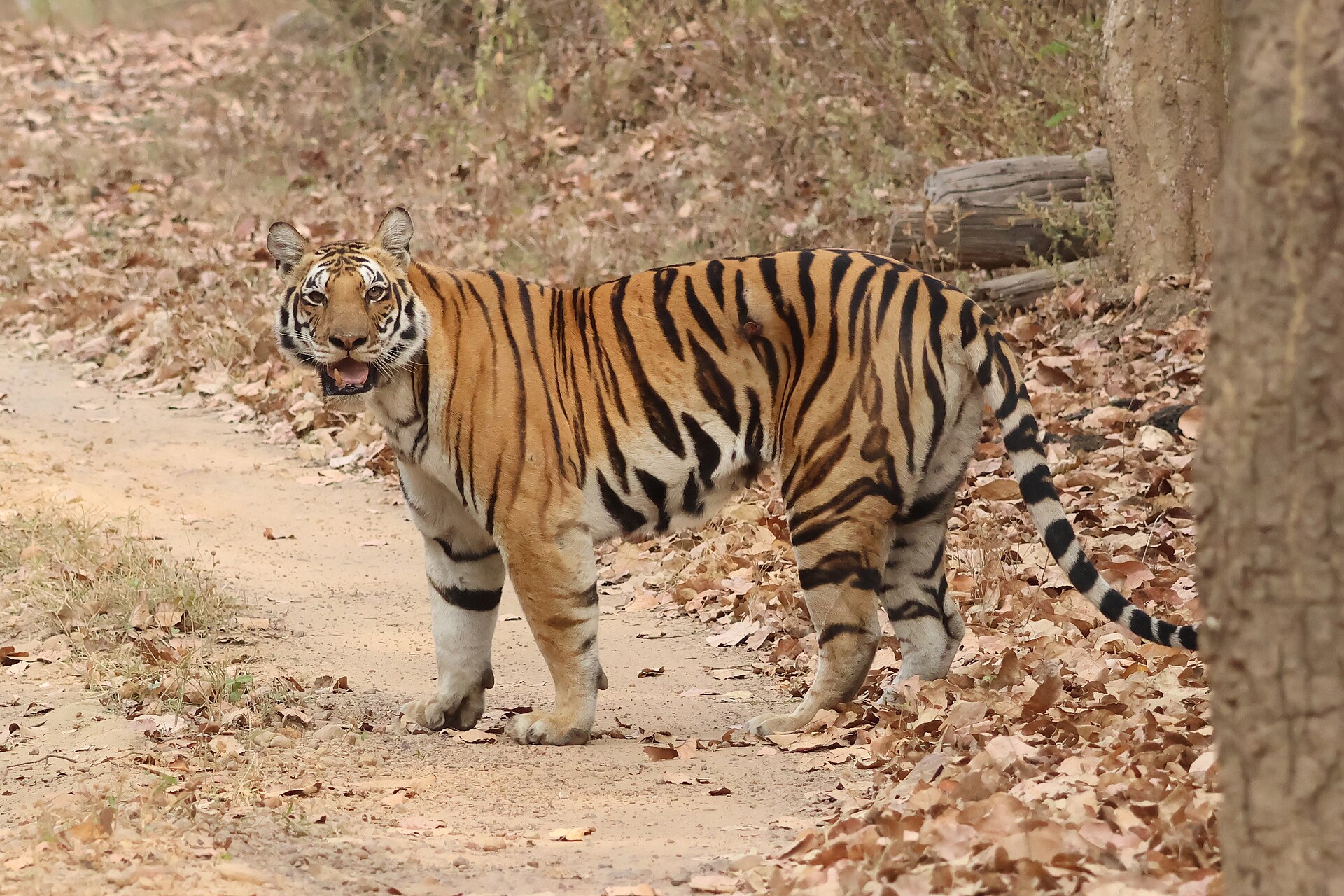
The number, read carefully
A species can be recovering and still remain perilously confined.
The newest public conservation estimate is commonly rounded to about 5,700 wild tigers. It combines the latest available national estimates, gathered in different years with camera traps, tracks, genetics and statistical models. It should be read as the best current picture of a difficult-to-count animal, not as 5,700 individually verified tigers alive on one day.
The IUCN's harmonized 2022 assessment used a narrower shared method and estimated 3,726 to 5,578 wild tigers, with roughly 3,140 mature individuals. The figures are not interchangeable, but neither is a reason to hide the uncertainty. Together they locate the species in the same human truth: every surviving population matters.
Where they remain
Ten countries hold the world's confirmed breeding populations.
Bangladesh, Bhutan, China, India, Indonesia, Malaysia, Myanmar, Nepal, Russia and Thailand. Within those borders, tiger habitat survives as separated forests, grasslands, mangroves and corridors rather than continuous national ranges.
01 · An uneven recovery
The global line is moving upward. The map beneath it is not equally secure.
India holds most of the world's wild tigers, while Nepal, Bhutan, Russia and parts of China have recorded sustained gains. Nepal's 2026 estimate reached 429, up from 121 in 2010. That is an extraordinary result of protected habitat, connected corridors, monitoring and years of work with communities living beside tiger country.
In Southeast Asia the story is more precarious. Cambodia, Laos and Viet Nam lost their breeding populations within the past quarter-century. Malaysia, Myanmar, Indonesia and Thailand retain vital populations, but habitat fragmentation, snaring and illegal trade keep recovery uncertain. A global increase can coexist with a regional disappearance.
02 · What is happening to them
A tiger needs prey, cover, water and enough connected land to move without becoming a conflict.
Forests are divided into islands.
Roads, farms, mines, settlements and infrastructure can split breeding populations and close the routes young tigers need to establish new territory.
An empty forest cannot hold a tiger.
Hunting and habitat loss reduce deer and wild pig. A protected tiger without a recovering prey base cannot remain protected for long.
Poaching remains an organized pressure.
TRAFFIC recorded at least 3,808 tigers in seizures from 2000 through June 2025. Enforcement gaps allow skins, bones and other parts to move across borders.
Recovery brings people and predators closer.
When livestock is taken or a person is harmed, conservation must respond quickly, fairly and with communities rather than asking rural families to carry a global recovery alone.
03 · What protection looks like
The work is patient, local and connected across borders.
Protect breeding habitat and the corridors between it, then design roads and development around the movement of wildlife and people.
Support trained, accountable rangers and community patrols while addressing the livelihood pressures that make forests vulnerable to hunting.
Use safer livestock practices, rapid compensation, early warning and locally designed response so living near a tiger does not become an unreimbursed cost.
Track breeding females, occupied range, genetic connection, prey, conflict and community safety alongside the total population estimate.
A note on language
Wild tigers are not all tigers on Earth.
Thousands more tigers live in captivity, often outside the countries where the species evolved. Those animals are not included in the wild estimate and generally cannot be treated as a substitute for self-sustaining populations in connected habitat. Sapiens uses “about 5,700” because the newest figure is rounded and method-dependent.
Read the evidence
Keep the sources beside the story.
WWF, TRAFFIC and Legal Atlas
The 2025 estimate of about 5,700 wild tigers across ten countries and the legal gaps that continue to enable trafficking.
Read the source Range and breeding populationsIUCN Cat Specialist Group
The ten countries with confirmed breeding populations, range decline and a scientific account of threats.
Read the source Illegal tradeTRAFFIC: Skin and Bones 2025
Twenty-five years of seizure records and the routes through which tiger parts continue to move.
Read the source A recovery worth studyingNepal's 2026 tiger estimate
How Nepal reached an estimated 429 wild tigers and why coexistence now determines whether that gain lasts.
Read the source